If you are trying to decide where to live in Agoura Hills, the biggest question is usually not city versus suburb. It is how close you want to be to open space, trails, civic amenities, and the 101 corridor. In a small, established city with a heavily owner-occupied housing base, those lifestyle differences can shape your daily routine in a very real way. This guide will help you understand how canyon-adjacent and cityside living compare so you can focus your home search with more clarity. Let’s dive in.
Agoura Hills at a glance
Agoura Hills has an estimated 19,429 residents and covers about 7.8 square miles. It is also a market where ownership is common, with 81.8% owner occupancy and a median owner-occupied home value of $1,098,000.
Those numbers help explain why local housing choices often feel more nuanced than dramatic. In Agoura Hills, the conversation is less about one side being better than another and more about which setting fits your pace, priorities, and comfort with trade-offs.
The real lifestyle split
The best way to think about Agoura Hills is as a continuum. On one end, you have homes that feel closer to canyons, trails, slopes, and larger-lot privacy. On the other, you have homes that feel closer to civic spaces, errands, recreation facilities, and the Agoura Road corridor.
That framing matches how the city plans for growth and land use. Agoura Hills includes very low-density areas with 1- to 5-acre lots and equestrian or agricultural uses, low-density estate-style areas, conventional single-family neighborhoods, and medium- to high-density areas generally placed on flatter land with better access to arterial streets and services.
What canyon-adjacent living feels like
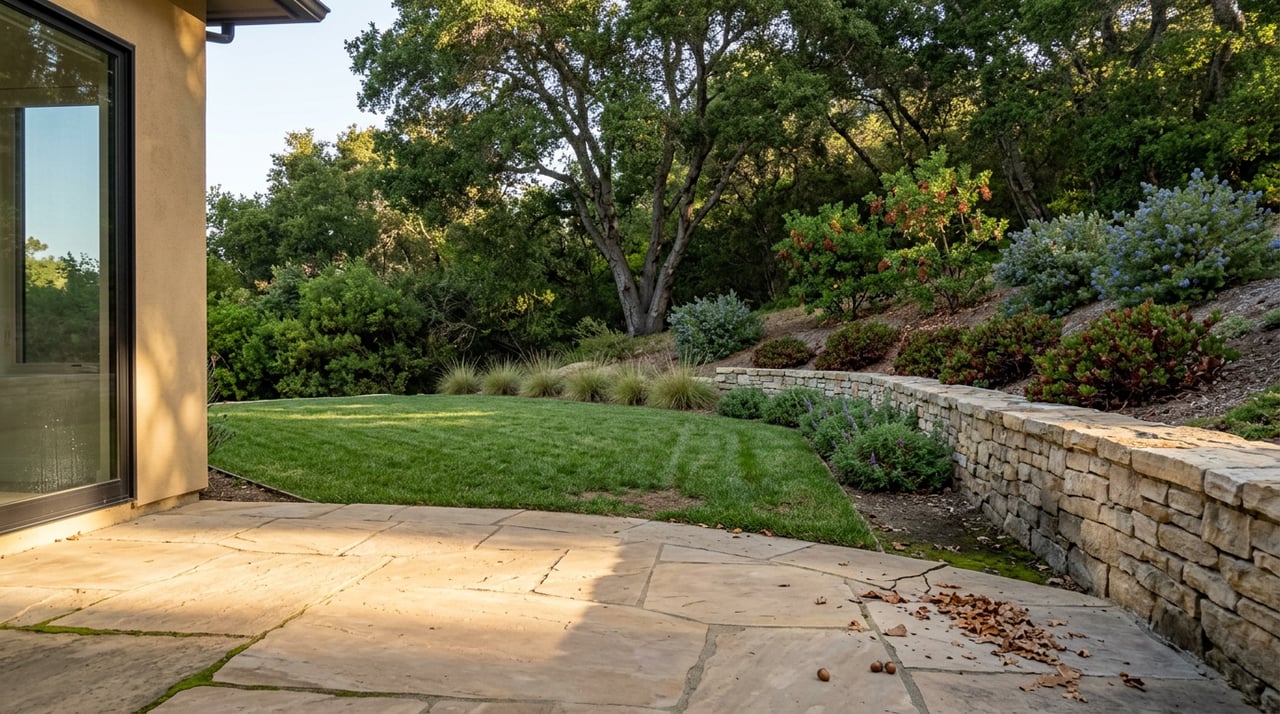
Canyon-adjacent living in Agoura Hills usually means being closer to open space connections and trailheads. Areas near Old Agoura and the Cheeseboro Canyon connection are a good example of this more trail-oriented setting.
The Agoura Equestrian Center Connector links Old Agoura Park to trails in Cheeseboro Canyon. The broader Cheeseboro and Palo Comado area is known for gently rounded hills and canyons used by hikers, bikers, equestrians, and runners.
More land and topography
Homes near the canyon edge often feel more secluded because the land-use pattern tends to be lower density. The city’s planning framework connects very low-density housing with larger parcels and steeper slopes, while low-density areas are associated with estate-sized lots.
For you as a buyer, that can translate into:
- More privacy
- Larger lots
- More visible terrain and elevation change
- Easier access to trails and equestrian-oriented spaces
- Less immediate walkability to retail and civic destinations
A stronger open-space connection
If your ideal day includes stepping outside and feeling close to nature, this side of Agoura Hills may stand out. The city describes itself as a gateway to trail systems and parklands connected to the Santa Monica Mountains National Recreation Area.
Most trails in the area are shared by hikers, bikers, equestrians, and runners. That shared-use setting can make the canyon edge feel active and outdoors-focused without being far from the rest of town.
Trade-offs to compare carefully
The benefits of canyon-adjacent living often come with practical questions. The city’s Housing Element states that about two-thirds of Agoura Hills is in the Very High Fire Hazard Severity Zone, and the entire portion south of U.S. 101 falls within that zone.
That does not mean canyon homes are off-limits. It does mean you should ask more detailed questions during your search and due diligence.
Key questions for canyon homes
When you tour homes closer to open space, consider asking about:
- Defensible space around the property
- Slope and drainage conditions
- Vegetation and maintenance needs
- Insurance availability and cost
- Access, parking, and drive approach
- Horse or trail-related features, if relevant to your lifestyle
What cityside living feels like
Cityside living in Agoura Hills is centered more around the Agoura Road, Cornell Road, and Ladyface Court corridor. This part of town tends to feel more convenience-driven, with civic uses, recreation amenities, and mixed-use activity closer together.
If you want daily errands, public facilities, and transportation access to play a bigger role in your routine, this side may feel more intuitive. It is still Agoura Hills, but the rhythm can be different.
Closer to civic amenities
The civic center includes City Hall and the public library at Ladyface Court. That gives this area a clearer public hub than parts of town that lean more toward hillsides and trail access.
The city is also planning the Ladyface Greenway along Agoura Road east of Cornell. The project includes walking, biking, equestrian, seating, art, and native-landscape elements, which reinforces the cityside focus on connected everyday use.
More mixed-use activity
The cityside corridor is also the most visibly mixed-use part of Agoura Hills. The Regency Center redevelopment includes a planned four-story, 278-unit apartment building with about 5,200 square feet of commercial space at Agoura Road and Cornell Road.
The city also launched Ladyface Marketplace at 5050 Cornell Road next to Whizin Market Square. Together, those projects support the idea that the cityside area is more amenity-rich and errand-friendly than the canyon edge.
Recreation and access shape daily life
Cityside living is not only about shopping or civic uses. It is also shaped by nearby parks and public facilities.
The city lists parks and facilities including ballfields, basketball courts, picnic shelters, and an equestrian arena at locations such as Chumash, Forest Cove, Morrison, Old Agoura, Reyes Adobe Park, and Sumac. Transportation services also include the AH-GO subsidized Lyft program within city limits, and the Reyes Adobe Interchange project reflects the area’s focus on access plus pedestrian and bicycle circulation near the 101 corridor.
Canyon versus cityside
If you are comparing two homes in Agoura Hills that seem close on a map but feel very different in person, this quick breakdown can help:
| Lifestyle factor | Canyon-adjacent | Cityside |
|---|---|---|
| Daily feel | More secluded, open-space oriented | More connected to errands and civic amenities |
| Typical land pattern | Larger lots, more slope, lower density | Flatter areas, more varied housing types |
| Outdoor access | Strong trail and equestrian access | Parks and greenway-oriented access |
| Convenience | Often more driving for retail and services | Easier access to mixed-use and civic corridor |
| Key buyer questions | Fire zone, drainage, vegetation, insurance | Parking, HOA rules, traffic flow, property type |
Which side fits your lifestyle?
The right choice depends on what you want your week to look like, not just your weekend. A home that feels peaceful and private on a Sunday morning may also mean more planning for errands, maintenance, and insurance questions.
On the other hand, a home near the cityside corridor may make daily tasks easier and put you closer to civic amenities, parks, and newer mixed-use activity. That convenience can matter just as much as lot size, especially if your schedule is already full.
Canyon-adjacent may fit you if
- You want to feel closer to trails and open space
- Privacy matters more than nearby retail
- You are comfortable evaluating slope, vegetation, and property maintenance
- You are drawn to larger lots or equestrian-oriented settings
Cityside may fit you if
- You want easier access to errands and public amenities
- You prefer flatter areas and a wider mix of housing types
- You want parks, civic destinations, and transportation options nearby
- You value convenience in your day-to-day routine
What buyers should compare before choosing
Because Agoura Hills is compact, lifestyle differences can show up quickly from one area to another. Before you decide, it helps to compare the practical details that affect how a home lives after move-in.
Focus on these side-by-side:
- Lot size and usable outdoor space
- Terrain and slope
- Wildfire exposure
- Parking and access
- HOA rules, if applicable
- Trail proximity
- Distance to shopping and services
- How often you expect to drive along the 101 corridor
A thoughtful comparison now can save you from buying a home that looks right on paper but does not fit your daily habits. That is especially important in a market where planning patterns, open space, and access all play a meaningful role.
If you want help narrowing down which part of Agoura Hills aligns with your goals, Altera Real Estate Services offers strategic, personal guidance to help you compare homes with confidence. Schedule a confidential buying or selling consultation.
FAQs
What does canyon-adjacent living in Agoura Hills usually mean?
- It generally means living closer to open space, trails, slopes, and lower-density areas that may offer larger lots, more privacy, and stronger access to outdoor recreation.
What does cityside living in Agoura Hills usually mean?
- It usually refers to homes closer to the Agoura Road, Cornell Road, and Ladyface Court corridor, where civic amenities, parks, mixed-use activity, and everyday services are more concentrated.
What should buyers ask about canyon homes in Agoura Hills?
- Buyers should compare defensible space, slope and drainage, vegetation maintenance, insurance considerations, parking, and access before moving forward.
Which part of Agoura Hills feels more convenient for errands?
- The cityside corridor generally feels more convenient for errands because civic uses and newer mixed-use activity are clustered near Agoura Road, Cornell Road, and Ladyface Court.
Are housing types different between canyon and cityside areas in Agoura Hills?
- Yes. Planning patterns suggest canyon-edge areas are more likely to include larger lots and lower-density housing, while flatter cityside areas are more likely to include a broader mix such as smaller-lot homes, townhomes, condos, and apartments.
How big is Agoura Hills and what does that mean for buyers?
- Agoura Hills covers about 7.8 square miles, which means lifestyle differences can show up quickly from one area to another even within a relatively small city.